
Renewed Hope CCT Payment: 35k Palliative Federal Government 2024

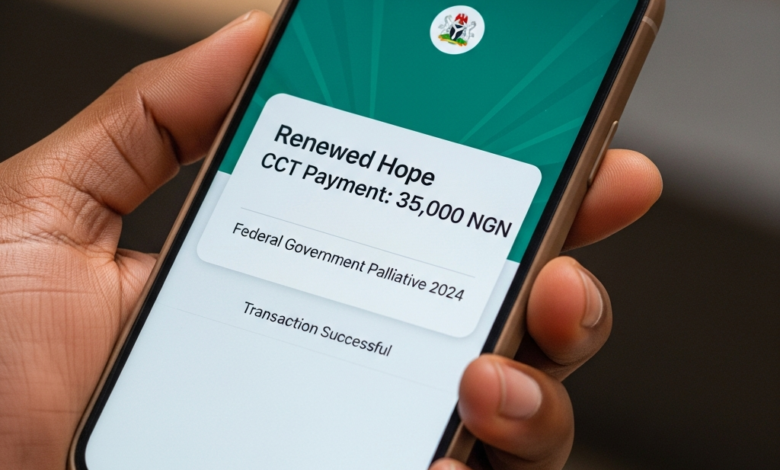
Let’s dive into what this truly means for ordinary Nigerians and how it plans to unlock a brighter future. Imagine, for a moment, the daily struggles faced by countless households – the rising cost of food, transportation, and basic necessities. It’s a reality many of us can relate to, a constant juggle to make ends meet. That’s precisely where the Renewed Hope CCT Payment steps in, offering a tangible lifeline.



So, what exactly is this “Renewed Hope CCT Payment”? CCT stands for Conditional Cash Transfer. Think of it as a direct financial assistance program where eligible beneficiaries receive money, often with certain conditions attached. These conditions usually revolve around positive social behaviors, like ensuring children attend school regularly or accessing health services. The “Renewed Hope” part isn’t just a catchy phrase; it reflects the current administration’s overarching agenda to uplift citizens and foster economic stability. This initiative is a cornerstone of that vision, promising relief and empowerment to those who need it most.
Now, let’s talk about the specific amount: the 35k federal palliative. This sum is a crucial component of the broader Renewed Hope CCT Payment. Why 35k? This palliative is primarily a direct response to the economic adjustments, particularly the removal of fuel subsidies, which have undoubtedly impacted daily living costs across the nation. It’s the government’s way of cushioning the blow, acknowledging the challenges, and providing immediate financial relief. For a family struggling to put food on the table, 35,000 Naira can make a world of difference, helping them meet essential needs and plan a little better for the future.
While the primary keyword here is “Renewed hope CCT payment,” it’s important to understand that this specific 35k federal palliative is part of a larger strategy extending into 2026. This longer timeline suggests a sustained effort, not just a one-off payment. It points to the government’s intention to implement a more enduring system of support. This isn’t just about providing temporary relief; it’s about building a foundation for more resilient households and communities over the next few years. The consistency implied by the 2026 outlook offers a greater sense of security and planning for beneficiaries.
Who stands to benefit from this crucial intervention? The target audience for the Renewed Hope CCT Payment generally includes vulnerable households, low-income earners, small-scale farmers, and women-headed households, among others. These are the backbone of our communities, individuals who often bear the brunt of economic shifts. Imagine a market woman, whose daily earnings determine if her children eat that night, receiving this support. Or a young artisan, struggling to buy materials for his craft. This financial injection can mean the difference between despair and determination, allowing them to invest in their small businesses, ensure their children’s education, or simply afford nutritious meals. It’s about empowering them to not just survive, but to truly thrive.
This commitment to the Renewed Hope CCT Payment isn’t just about handing out money; it’s about stimulating local economies and improving overall welfare. When families have a little extra, they spend it on local goods and services, which in turn supports small businesses and creates a positive ripple effect. It’s a strategic investment in human capital and economic stability. By focusing on targeted relief, the government hopes to lift millions out of poverty and create a more equitable society. This deeply personal impact on individual lives is what makes this initiative so powerful and, dare I say, truly hopeful.
Defining the Renewed Hope CCT Payment: Understanding the Federal Government’s 35k Initiative
Following the promising seeds planted by such initiatives, let’s really zoom in on what this whole program is all about. We’re talking about the Renewed Hope CCT payment, a truly significant step by the Federal Government that’s making waves and sparking conversations across the nation. Imagine a helping hand, not just a temporary fix, but a structured approach designed to uplift families and communities. That’s essentially the heart of this initiative.
At its core, the Renewed Hope CCT payment is a Conditional Cash Transfer program. Now, don’t let “conditional cash transfer” sound complicated. Think of it this way: it’s like receiving a bit of financial support, but with a friendly understanding. This “understanding” often means making sure children attend school regularly, or that families access essential health services like immunizations. It’s a win-win: families get crucial funds, and in return, they invest in their family’s future health and education. It’s about empowering people to make choices that benefit everyone in the long run.
The specific figure we often hear is the 35k palliative. This refers to the approximate amount of thirty-five thousand Naira. When we say “palliative,” it means relief. It’s like a soothing balm applied to ease immediate hardship and provide comfort during challenging times. For countless families, this 35k isn’t just a number; it’s the difference between a child going to bed hungry or with a full stomach. It’s the choice between affording necessary medicine or going without. It’s a tangible expression of the Federal Government’s commitment to cushioning the economic pressures faced by its citizens.
Have you ever worried about making ends meet, even just for a week? Now, imagine that worry being a constant companion. For many, that’s a daily reality. The Renewed Hope CCT payment aims to lighten that burden, even if just a little. It’s designed to provide a much-needed financial boost directly into the hands of those who need it most. This isn’t about fostering dependence; it’s about providing a safety net, a springboard from which families can regain their footing and build a better future.
Looking ahead to 2026, this program is envisioned as a cornerstone of the nation’s poverty alleviation strategies. The government isn’t just thinking about today; it’s planning for sustained well-being. By setting targets and looking towards future implementation, the Federal Government hopes to create a lasting impact. The year 2026 signifies not an end, but a milestone in a larger journey towards economic stability and social equity. It’s a commitment to a longer-term vision, ensuring that the positive effects of these interventions continue to be felt.
Let’s consider Mama Nkechi, a single mother trying to send her three children to school. Before this initiative, every day was a struggle, a constant calculation of meager resources. The Renewed Hope CCT payment of 35k, when received, could mean paying for school supplies, buying nourishing food, or even starting a small business selling akara or groundnuts. It’s about igniting that spark of entrepreneurial spirit and allowing individuals to lift themselves up with dignity. This isn’t a handout; it’s a hand up.
The federal government’s involvement underscores the national scale and importance of this program. It’s not a localized effort, but a broad, coordinated strategy to address poverty from the top down. This ensures that the benefits reach a wide array of eligible households across different states and communities. The ultimate goal is to foster an environment where every citizen, regardless of their starting point, has a fair chance at a decent life.
In essence, the Renewed Hope CCT payment is more than just a financial transaction. It embodies several key principles:
* Targeted Relief: It focuses specifically on vulnerable households.
* Empowerment: It gives families the autonomy to decide their most pressing needs.
* Human Capital Investment: By linking payments to education and health, it invests in the future generation.
* Economic Stimulus: The money spent locally supports small businesses and local markets.
* Hope and Dignity: It restores a sense of self-worth and optimism to families facing immense challenges.
So, when you hear about the Renewed Hope CCT payment and the 35k palliative from the Federal Government, think beyond the numbers. Think of the real people, the families, the children whose lives are being positively touched. It’s an ambitious initiative aimed at building a stronger, more equitable society, one household at a time, moving steadfastly towards a more prosperous 2026 and beyond.
Who Qualifies for the Renewed Hope CCT Payment? Eligibility Criteria for the 35k Federal Palliative
We’ve talked about the incredible vision behind the Renewed Hope CCT payment and the 35k palliative from the Federal Government. We’ve seen how it can bring a genuine sense of dignity and a spark of optimism to families. But now, a very important question naturally comes to mind: “Who exactly is this for? How does one become eligible to receive this vital support?”
It’s a question many of us would ask, perhaps for ourselves, a struggling neighbour, or a family member. It’s natural to wonder about the specifics, especially when such a significant amount of relief is being offered. The Federal Government’s goal with this 35k palliative is clear: to reach those who need it most, ensuring the support makes a tangible difference where it counts.
Think of it like this: if you wanted to help your community, you wouldn’t just throw money anywhere, right? You’d look for the people truly struggling, the families facing the toughest times. That’s precisely the principle guiding the eligibility criteria for the Renewed Hope CCT payment. It’s all about identifying the most vulnerable households across the nation.
So, let’s break down the key factors that typically determine who qualifies for this crucial financial assistance. Understanding these criteria can help clarify whether you, or someone you know, might be among the beneficiaries.
1. The National Social Register (NSR): The Starting Point
First and foremost, the government doesn’t just pick names randomly. They rely heavily on something called the National Social Register (NSR). Imagine this as a carefully compiled, official database of the poorest and most vulnerable households in Nigeria.
* This register is built through a painstaking process of community-based targeting. Local community members, who know their areas best, help identify families genuinely struggling.
* If your household is already listed in the NSR, it’s a strong indicator that you meet a foundational eligibility requirement for the Renewed Hope CCT payment.
2. Household Poverty Status: Focusing on the Deepest Needs
The core of the program is poverty alleviation. This isn’t just about being a little tight on money; it’s about deep-seated vulnerability.
* Eligibility is primarily for households classified as “poor” or “vulnerable” based on specific socio-economic indicators. These often include income levels, access to basic necessities like food, clean water, shelter, and healthcare.
* For instance, a household where the primary income earner struggles to provide even one meal a day for their children would likely fit this criterion.
3. Geographic Location: Where the Need is Greatest
Sometimes, eligibility also considers where families live. Certain regions, states, or even local government areas might be prioritized due to higher poverty rates or specific challenges.
* This could include rural communities that lack economic opportunities or urban areas with high concentrations of informal sector workers struggling to make ends meet.
* The idea is to ensure that the 35k palliative reaches communities that are disproportionately affected by economic hardships.
4. Household Characteristics: Supporting Specific Vulnerabilities
Beyond general poverty, the program often looks at the unique composition of a household to identify specific vulnerabilities.
* Female-headed households: These are often prioritized, as women frequently face greater economic challenges and carry significant burdens in raising families.
* Households with many children: Large families, especially those with young dependents, often struggle more to meet basic needs.
* Households with persons with disabilities: Families caring for individuals with special needs might also be given priority due to the added financial and caregiving responsibilities.
5. Documentation and Verification: Ensuring Transparency
To ensure the payments reach the right hands and prevent fraud, certain documentation and verification steps are crucial.
* Beneficiaries are usually required to have a Bank Verification Number (BVN) linked to an active bank account. This ensures secure and traceable direct transfers of the 35k palliative.
* Having a National Identification Number (NIN) is also increasingly becoming a standard requirement for accessing government programs.
What if you don’t know if you qualify?
If you believe your household meets these criteria, and you’re not sure if you’re on the National Social Register, it’s important to seek out official information. While we can’t provide direct enrollment here, government ministries or local community development offices are the best places to inquire.
This Renewed Hope CCT payment is more than just money; it’s a lifeline designed with deep thought and empathy. By setting these clear eligibility criteria, the Federal Government aims to ensure that the 35k palliative truly lands in the hands of those who need it most, helping to lift them out of hardship and build a brighter future as we move towards 2026 and beyond.
The Road Ahead: Implementation Plans and the 2026 Vision for the Renewed Hope CCT Payment Program
Okay, so we’ve talked about how important this Renewed Hope CCT payment is and who it’s meant to help. But how will it actually get from the government’s good intentions into the hands of families like yours or your neighbor’s? That’s where the “Road Ahead” comes in – a clear, practical plan to make sure this vision becomes a reality, especially as we look towards 2026.
Imagine you’re trying to send a vital message across a large country. You wouldn’t just shout it out, right? You’d need a clear system, reliable pathways, and people ready to listen and act. That’s exactly the mindset behind the implementation of the Renewed Hope CCT payment. The Federal Government isn’t just throwing money at a problem; they’re building a sturdy bridge to deliver this crucial support.
One of the biggest hurdles in any large-scale program is ensuring the money actually reaches the right people, without any detours or diversions. That’s why the government is focusing on robust, transparent systems. We’re talking about leveraging technology to make things smoother and more accountable. Think about digital payment systems, where funds are transferred directly into beneficiaries’ accounts. This reduces the need for physical cash handling, making the process safer and much more efficient. It also means less chance for errors and more certainty that your Renewed Hope CCT payment arrives safely.
But technology is only part of the story. Human connection and local knowledge are just as vital. Remember how we mentioned direct enrollment through government ministries or local community development offices? These aren’t just administrative hubs; they are the heart of the outreach effort. Staff in these offices are undergoing training to understand the program inside out. They’re being equipped to guide you through the application process, answer your questions in plain language, and help verify that those applying truly meet the criteria. It’s about creating a supportive, understanding environment, not a confusing bureaucratic maze.
The government is also working closely with community leaders and local authorities. Who better understands the needs of a particular village or neighborhood than the people who live and work there every day? These local champions play a critical role in identifying deserving individuals, helping to spread awareness about the Renewed Hope CCT payment, and even assisting in the enrollment process. It’s a team effort, combining national vision with grassroots action, to ensure that the 35k palliative reaches every corner it’s intended for.
Now, let’s cast our gaze a little further, towards the “2026 Vision.” What does success look like for the Renewed Hope CCT payment program by then? It’s not just about counting how many people received the 35k. It’s about the ripple effect this support creates. Imagine a parent, previously struggling to put food on the table, now able to provide nourishing meals for their children. Picture a small business, buoyed by this additional income, able to buy a bit more stock or repair a vital piece of equipment.
The vision for 2026 is one where families feel more secure, children stay in school, and communities begin to thrive. It’s about lifting families out of the immediate pressures of poverty, giving them a chance to breathe, and then empowering them to build a more stable future. This isn’t just a handout; it’s an investment in human potential. The government hopes that by 2026, the cumulative impact of the Renewed Hope CCT payment will be evident in reduced poverty rates, improved health outcomes, and a noticeable boost in local economic activities.
Regular monitoring and evaluation will be key to this vision. Think of it like checking your car’s engine during a long journey. Are things running smoothly? Are there any adjustments needed? The government plans to continuously assess the program’s effectiveness, gather feedback from beneficiaries, and make necessary tweaks to ensure it remains impactful and relevant. This adaptive approach means the program can evolve to meet changing needs and continue to deliver on its promise.
So, as we move forward, remember that this isn’t just a fleeting initiative. The Renewed Hope CCT payment is part of a larger, carefully considered strategy designed to foster resilience and create genuine opportunities. It’s a commitment to a future where more Nigerians can live with dignity, security, and yes, renewed hope. The path to 2026 is being paved with careful planning, transparent delivery, and a profound belief in the potential of every individual. Are you ready to see this hope blossom?
Beyond Palliative: The Transformative Economic Impact of the 35k Renewed Hope CCT Payment
The previous discussion hinted at something profound, didn’t it? We talked about a larger strategy, a commitment to dignity and security for all Nigerians. Now, let’s explore how the Renewed Hope CCT payment moves beyond simply offering temporary relief to become a genuine force for economic transformation.
Think about it this way: palliative care addresses symptoms, but true transformation tackles the root causes. This 35k isn’t just a temporary fix; it’s a carefully designed tool to empower individuals to build a more stable financial future for themselves and their families. It’s about building a better tomorrow, not just surviving today.
Of course, the immediate relief provided by the 35k is absolutely crucial. That money can put food on the table, cover urgent medical bills, or buy essential school supplies for a child in need. For countless families under immense pressure, it offers a much-needed breath of fresh air.
However, for many, this payment also acts as vital seed capital, sparking new possibilities. Imagine a young woman in a rural community who dreams of selling handcrafted goods at the local market. With the Renewed Hope CCT payment, she could buy materials, a small display table, or even get a basic skill training.
Suddenly, a dream transforms into a small, income-generating business. Or picture a farmer who needs to repair a crucial tool to cultivate his land; the 35k can bridge that gap. These aren’t just expenses; they are investments in potential.
These individual acts of enterprise, multiplied across communities, ignite local economies. When people invest in their small businesses or buy more from local vendors, money circulates within the community. This creates a powerful ripple effect, supporting more jobs and services for everyone.
Beyond the raw numbers, this initiative restores something invaluable: dignity. Having the financial means to make choices, to plan a little, rather than just reacting to crisis, can be life-changing. It’s about giving people back control over their circumstances and fostering a sense of self-worth.
Consider the profound impact on education. For many families, the 35k Renewed Hope CCT payment could mean the difference between a child attending school or having to stay home due to lack of funds. It’s a direct investment in human potential, building a more skilled and knowledgeable workforce for Nigeria’s future.
Improved finances also lead to better health outcomes. Families can afford more nutritious food, access basic medical care, and live in slightly less stressful environments. A healthier community is a more productive and resilient community, ready to contribute more to national development.
Economists often speak of a “multiplier effect” – where every naira spent generates more than just its face value in economic activity. The Renewed Hope CCT payment is strategically designed to kickstart this process at the grassroots level. It turns individual support into collective prosperity.
As we look towards 2026, it’s clear this isn’t a one-off charitable handout. It’s a foundational component of a long-term strategy to lift people out of poverty. It aims to build sustainable pathways to self-sufficiency, ensuring lasting change.
By providing regular, predictable support, the program helps families build a buffer against unexpected challenges. This enhanced resilience means fewer families will fall back into extreme poverty when facing economic shocks. It’s about creating strength from within the community.
So, the 35k Renewed Hope CCT payment acts as a powerful catalyst. It transforms immediate relief into lasting economic opportunity. It empowers individuals, strengthens communities, and lays the groundwork for broader national development, moving Nigeria forward.
This is how a single payment moves beyond palliative care to create truly transformative economic change. It’s an inspiring example of how targeted support can unlock potential, foster dignity, and pave the way for a future filled with genuine renewed hope for all.
Navigating the Path: Addressing Potential Challenges and Ensuring Success for the Renewed Hope CCT Payment
It’s truly inspiring to imagine the kind of transformation a well-implemented program can bring. We talked about how a single payment can be a powerful catalyst, creating a ripple effect of opportunity and strength. Sounds amazing, doesn’t it? But let’s be real for a moment. Even the best intentions and the most brilliant plans can face hurdles on the ground.
Navigating the path to genuine success for a program like the Renewed hope CCT payment requires more than just good intentions; it demands careful planning, foresight, and a willingness to tackle challenges head-on. Think of it like building a sturdy bridge. You need solid foundations, strong materials, and skilled engineers to ensure it stands the test of time and carries its load safely.
Getting the Money to the Right Hands: The Challenge of Identification
One of the first questions that often comes to mind is, “How do we make sure the people who really need this help actually get it?” Imagine your neighbour, Mrs. Ade, a hardworking widow struggling to feed her children, but somehow, her name isn’t on the list. Or perhaps someone who doesn’t quite fit the criteria manages to slip through. It’s a delicate balance.
Ensuring accurate identification and inclusive registration is absolutely critical. We need systems that are fair, transparent, and reach into every corner, no matter how remote. This isn’t just about collecting data; it’s about seeing each individual, understanding their circumstances, and making sure no one deserving is left behind.
* Community Involvement: Engaging local leaders and community groups can be incredibly powerful. They know their people best and can help identify those truly in need.
* Robust Verification: Using existing national identification systems, combined with community-level checks, can help minimize errors and prevent unintended exclusions.
Building Trust and Battling Diversion: Ensuring Transparency
Let’s be honest: when large sums of money are involved, concerns about corruption or funds being diverted often arise. Nobody wants to see money meant for struggling families end up in the wrong pockets. This is a very real fear for many citizens, and addressing it head-on is vital for the credibility and success of any program, especially one as impactful as the Renewed hope CCT payment.
Trust is the bedrock of any successful public initiative. Building and maintaining that trust means being incredibly transparent about how funds are distributed, who receives them, and how complaints are handled. Using technology, such as secure electronic payments, can significantly reduce opportunities for fraud and increase accountability. Regular audits and clear communication about findings are also key. It’s about building a system where everyone feels confident that the process is honest and fair.
Bridging the Digital Divide and Reaching Remote Areas
Consider Musa, who lives in a small village several hours from the nearest town. He doesn’t have a bank account, and mobile network coverage is patchy at best. How will the Renewed hope CCT payment reach him? This is a practical challenge that demands innovative solutions. Not everyone has easy access to banks, smartphones, or even reliable internet.
Providing diverse payment options is crucial. While digital payments offer efficiency, we must also cater to those in unbanked or underserved areas. This might mean:
* Mobile Money Agents: Partnering with mobile network operators to leverage their agent networks for cash-out services.
* Community Payment Points: Establishing designated, secure locations within communities where people can safely receive their funds.
* Financial Literacy: Offering simple guidance on how to manage the funds, save, or invest, empowering beneficiaries beyond just receiving cash.
More Than Just a Handout: Fostering Lasting Change
While immediate relief is crucial, true success lies in the long-term impact. Is the Renewed hope CCT payment just a one-time relief, or can it genuinely spark lasting change? We want to see families not just survive, but thrive. This means looking beyond the cash itself.
Connecting beneficiaries to broader opportunities can amplify the impact of the payment. This could involve:
* Skill-Building Workshops: Offering training in vocational skills or entrepreneurship.
* Access to Micro-Loans: Helping recipients leverage their payment to start or expand small businesses.
* Health and Education Linkages: Encouraging families to invest in their children’s schooling or access vital health services.
This is where the true spirit of the Renewed hope CCT payment can shine, transforming temporary assistance into a stepping stone towards self-sufficiency and improved quality of life.
Spreading the Word: Effective Communication
Finally, how will everyone know about this incredible opportunity? Clear, consistent, and accessible communication is paramount. It’s not enough to simply launch a program; people need to understand who is eligible, how to apply, and what to expect. This means using multiple channels – local radio, community meetings, simplified printed materials in various languages, and engaging trusted local figures.
Ensuring success for the Renewed hope CCT payment in 2026 and beyond isn’t a walk in the park. It’s a journey that requires vigilance, adaptability, and a genuine commitment to the people it aims to serve. By proactively addressing these potential challenges with thoughtful strategies, transparency, and a strong community focus, we can help ensure that this initiative truly delivers on its promise of a future filled with genuine renewed hope for millions.
Your Essential Guide: FAQs on the Renewed Hope CCT Payment and Federal Palliative Benefits
Navigating government programs can sometimes feel like trying to solve a complex puzzle, right? Especially when there’s so much information swirling around. You might be hearing about the Renewed hope CCT payment and other federal palliative benefits, and perhaps you have a few burning questions. Don’t worry, you’re not alone! Let’s sit down, grab a virtual cup of tea, and walk through some of the most common questions you might have, making sure everything is clear and easy to understand.
*
What exactly is the Renewed Hope CCT Payment?
Think of the Renewed hope CCT payment as a helping hand from the government to families who need it most. CCT stands for Conditional Cash Transfer. This simply means that eligible families receive regular cash payments, often with the understanding that they meet certain conditions, like ensuring their children attend school or get regular health checks. It’s all about lifting up households and giving them a better chance at a brighter future.
Who is eligible for this payment? Am I?
That’s a fantastic question, and one many people ask. Generally, the Renewed hope CCT payment targets the most vulnerable members of our communities. This often includes low-income households, single-parent families, persons with disabilities, and sometimes women-headed households. The exact criteria are usually set by specific government agencies, aiming to ensure the support reaches those who truly need it to improve their daily lives.
How much money are we talking about? Is it really 35k?
Ah, the 35k figure! You’ve probably seen it mentioned, and it’s an important number to discuss. While specific amounts for palliative measures can vary based on government announcements and economic realities, the 35,000 Naira you might have heard about is indeed a significant figure often discussed in relation to federal palliative support. This amount could represent a monthly stipend or a component of a larger relief package aimed at cushioning the effects of economic adjustments, particularly as we look towards 2026. The goal is to provide meaningful relief, and the Renewed hope CCT payment is a crucial part of that larger picture.
How do I sign up or register for the Renewed Hope CCT Payment?
This is where local engagement truly comes into play, as we discussed earlier. Typically, registration for the Renewed hope CCT payment involves community-level identification and verification processes. You might need to visit your local government area office or speak with community development officers. It’s always best to look for official announcements and guidance from government-backed platforms to ensure you’re following the correct procedure and avoiding any misinformation. They often rely on data from community surveys and trusted local figures to build their recipient lists.
When will these payments begin or continue into 2026?
The commitment to continuing these vital support systems, including the Renewed hope CCT payment, extends into 2026 and beyond. While specific rollout dates can sometimes be fluid due to administrative processes, the government’s intention is to ensure continuity for eligible beneficiaries. Stay tuned to official government news channels and trusted media for precise timelines. The aim is to create a sustainable support system, not just a one-off intervention.
What are these “Federal Palliative Benefits” and how do they fit in?
Beyond just direct cash transfers, “palliative benefits” refer to a broader range of measures designed to ease economic hardship. Think of it like a diverse basket of support, where the Renewed hope CCT payment is a key item. These benefits can include things like subsidies on essential goods, improved access to healthcare, transport assistance, or even training programs to help people find better jobs. They all work together to provide comprehensive relief and foster economic stability for families.
How will I actually receive my money?
Transparency and accessibility are key here. Most modern conditional cash transfer programs, including the Renewed hope CCT payment, utilize secure payment methods. This often means direct bank transfers to your account, or payments through mobile money platforms. For those in more remote areas without easy access to banking, sometimes designated payment agents or community centers are used, always under strict supervision. The goal is to get the money safely and directly into the hands of beneficiaries.
What if I have a problem or question? Where can I get help?
It’s completely normal to have questions or encounter issues along the way. If you need help with the Renewed hope CCT payment or any related palliative benefits, your first port of call should always be official government channels. This could be dedicated helplines that are often advertised, your local government secretariats, or community liaison officers. Avoid unofficial sources to ensure you receive accurate and timely assistance. Remember, these programs are designed to help you, so don’t hesitate to reach out.
*
We hope this essential guide has answered some of your pressing questions and shed more light on the Renewed hope CCT payment and federal palliative benefits. Understanding these initiatives is the first step towards leveraging them effectively for a truly hopeful future.
A New Dawn for Welfare: The Lasting Legacy and Future of the Renewed Hope CCT Payment
Now, as we look ahead, what does this Renewed hope CCT payment truly mean for the fabric of our society? It’s more than just an immediate relief; it’s about sowing seeds for a more resilient and equitable future. We’ve talked about the immediate impact, but let’s consider the lasting legacy this initiative aims to create.
Imagine for a moment a mother, struggling to put food on the table, suddenly finding a stable path forward. That 35k palliative support isn’t just money; it’s the ability to buy school uniforms, access basic healthcare, or even invest in a small trade. This shift from constant worry to cautious optimism is the true essence of the Renewed hope CCT payment.
Isn’t it heartening to think about the ripple effect? When families have a bit more security, children can focus on their studies instead of hunger. Local markets see more activity, as money circulates within communities. This isn’t just about individual betterment; it’s about strengthening the very foundations of our towns and villages.
The program’s design, aiming for consistency and transparency, sets a powerful precedent. It tells citizens that their welfare is a priority, and that the government is committed to practical solutions. This builds trust, encourages participation, and ultimately, fosters a more engaged citizenry. This commitment is vital for the continued success of the Renewed hope CCT payment.
Looking towards 2026 and beyond, we can envision a new dawn for welfare in Nigeria. The ambition is not just to distribute funds but to empower individuals to break cycles of poverty. How can we ensure this momentum continues and grows?
* Sustained Government Commitment: Ongoing dedication from the federal government is key to the program’s long-term impact. This means consistent funding and policy support.
* Community Involvement: Active participation from local leaders and community members helps identify those most in need and ensures the aid reaches its intended recipients.
* Technology for Transparency: Using modern tools can make the distribution process even more efficient and reduce potential hurdles, making the Renewed hope CCT payment accessible to all eligible citizens.
* Monitoring and Evaluation: Regularly checking in on the program’s effectiveness helps fine-tune its approach, ensuring it evolves to meet changing needs.
The Renewed hope CCT payment is poised to leave a significant mark. It’s a testament to the belief that with targeted support, even the most vulnerable among us can achieve stability and growth. We’re talking about creating a legacy where relief isn’t just a temporary fix, but a springboard for lasting change.
Think of it as laying down bricks for a stronger, more inclusive society, one family at a time. The goal is to move beyond mere survival, allowing people to thrive and contribute their unique talents back to the nation. This is what truly builds a hopeful future.
What kind of Nigeria do we want to see in the coming years? One where every citizen has a fair shot at a decent life, free from the crushing weight of extreme poverty. Programs like the Renewed hope CCT payment are crucial steps on that path. They embody the understanding that economic stability for one is economic stability for all.
Ultimately, the success of this initiative will be measured not just in the number of payments made, but in the countless stories of lives transformed. It’s about the child who stays in school, the small business that finally takes off, the family that can breathe a sigh of relief. That, truly, is the enduring promise of the Renewed hope CCT payment and the comprehensive palliative support from the federal government. It’s an investment in our collective future, a bold step towards a Nigeria where hope isn’t just a word, but a tangible reality for millions.


Join our Platform: https://url-shortener.me/BI1Q
I need it
Join our Platform: https://url-shortener.me/BI1Q
God please remember me oo
I am tired of struggling
Join our Platform: https://url-shortener.me/BI1Q
Mr president God Almighty will continue to strengthen you thank you sir
Join our Platform: https://url-shortener.me/BI1Q
danjumaavongs@gmail.com
Join our Platform: https://url-shortener.me/BI1Q
Kennetholaife@gmail.com
Join our Platform: https://url-shortener.me/BI1Q
Opadiranajibola39@gmail.com
sulaimaninuwa552@gmail.com
Good evening sir/ma, how can i apply for this palliative portal gran
Join our Platform: https://url-shortener.me/BI1Q
How can I register
Join our Platform: https://url-shortener.me/BI1Q
hsalisu062@gmail.com
Join our Platform: https://url-shortener.me/BI1Q
I have not not been paid for two times now but I registered with Renew hope
Join our Platform: https://url-shortener.me/BI1Q
Here is my details , Account name : Mary Nathaniel John, Account number:0072968007, Bank: Access Bank
Join our Platform: https://url-shortener.me/BI1Q
When is the money usually paid(date of payment is not known)? Why is there not alert to the beneficiaries even when their phone contact was collected? Why must the money be moved to ledger balance from the available balance after some limited days of payment(or when the beneficiary withdraws small), and then make it unaccessible to the beneficiary again? Is this program not fraud too. Questions begging for answer.
Join our Platform: https://url-shortener.me/BI1Q
When are they paying the 25k palliative please
Join our Platform: https://url-shortener.me/BI1Q
I wil be appreciates if I am granted
Join our Platform: https://url-shortener.me/BI1Q
Ba za a buga adireshin imel ɗin ku ba. Ana yiwa filayen da ake buƙata alama *
Join our Platform: https://url-shortener.me/BI1Q
smurtalayabo@gmail.com
Join our Platform: https://url-shortener.me/BI1Q
A good government initiative
Join our Platform: https://url-shortener.me/BI1Q
How can I be part of it
Join our Platform: https://url-shortener.me/BI1Q
We appreciate but it was 25000 that was send to me
Join our Platform: https://url-shortener.me/BI1Q
Daudu Guma LAG benue state Nigeria
Join our Platform: https://url-shortener.me/BI1Q
What happened never receive my own last December till now
Join our Platform: https://url-shortener.me/BI1Q
Ummalkhairiadam19@gmail.com
Join our Platform: https://url-shortener.me/BI1Q
islamiyatmohammed123@gmail.com
Join our Platform: https://url-shortener.me/BI1Q
Aisha
Join our Platform: https://url-shortener.me/BI1Q
may God bless this government..and we will continous supports it movement for the second term.
At some point I needed to check whether my laptop supports a RAM upgrade. While
looking for answers I discovered https://znayka.com.ua.
I couldn’t find practical upgrade instructions on most websites. Many sources were missing key details.
On this site I found practical upgrade information, along with step-by-step visuals that made everything much easier to understand.
I recommend this site to anyone looking for clear tech explanations if you want reliable information about laptops and hardware upgrades.