
FG Expands Cash Transfer Programme to 15 Million: What It Means for Vulnerable Nigerians

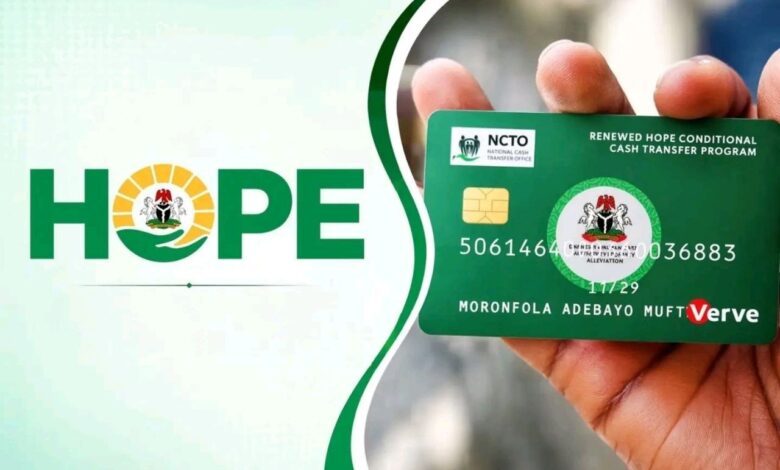
FG Expands Cash Transfer Programme to 15 Million: The Federal Government’s decision to scale its flagship social protection initiative marks a turning point in Nigeria’s battle against poverty. Here is everything you need to know.
In a country where over 106 million citizens live in extreme poverty, government-backed financial relief programmes are not just policy tools they are lifelines. The Federal Government of Nigeria has taken a bold and consequential step by announcing the expansion of its Household Prosperity and Empowerment Cash Transfer (HOPE-CT) Programme, raising the target beneficiary figure from 9.2 million to a landmark 15 million vulnerable Nigerians.



This expansion, announced by the Minister of Humanitarian Affairs and Poverty Reduction, Dr. Bernard Doro, during the HOPE-CT implementation update and press conference in Abuja, signals a deepening commitment by the Tinubu administration to cushion the harsh effects of economic reforms on the country’s most disadvantaged citizens. With approximately ₦688 billion already disbursed to 9.2 million beneficiaries over a two-year period spanning November 2023 to February 2026 Nigeria Startup News, the programme has already made significant inroads. But the scale-up to 15 million is where the real story begins.
FG Expands Cash Transfer Programme: What Is the HOPE-CT Programme?
The Household Prosperity and Empowerment Cash Transfer Programme popularly known as HOPE-CT — is one of the Federal Government’s flagship social protection interventions. The initiative was introduced as a shock-response mechanism to support low-income Nigerians amid ongoing macroeconomic adjustments, anchored on the National Social Register.
Under the scheme, each eligible household is set to receive a total of ₦75,000, disbursed in three tranches of ₦25,000 Legit.ng. This phased payment structure is deliberate and strategic. Rather than a one-off disbursement that may be quickly exhausted, the staggered approach ensures that beneficiaries receive sustained assistance over time, enabling them to better manage essential household expenses such as food, healthcare, and transportation.
The programme is not a standalone effort. It operates in collaboration with critical national institutions including the National Identity Management Commission (NIMC), the National Social Safety Nets Coordinating Office (NASSCO), the National Cash Transfer Office (NCTO), and the National Social Investment Programme Agency (NSIPA).
The Scale-Up: From 9.2 Million to 15 Million
The headline figure 15 million is not arbitrary. It reflects a deliberate and data-driven policy decision rooted in Nigeria’s poverty landscape. Speaking at the press conference, Minister Doro stated: “We have set a target to move the Household Prosperity and Empowerment Cash Transfer Programme from the current 9.2 million to 15 million Nigerians.” Punch
The Programme Manager of the National Cash Transfer Office, Abdullahi Alhassan, provided further clarity on the upward revision. He disclosed that the beneficiary target had been officially reviewed upward from 10.4 million to 15 million vulnerable Nigerians Nigeria Startup News. This suggests the government is not merely responding to public pressure but is recalibrating based on implementation data and the widening reach of poverty across the nation.
As of March 2026, more than 9 million households had already received the first tranche, marking significant progress in one of Nigeria’s largest direct social intervention programmes Legit.ng. The next disbursement phases will be critical in determining how smoothly the government transitions to the broader 15 million target.
Why This Expansion Matters
Nigeria’s poverty crisis is staggering in its scale. According to the World Bank’s April 2025 Africa’s Pulse report, Nigeria is home to 19% of the extremely poor population in sub-Saharan Africa — the highest share across the region — meaning more than 1 in every 7 of the world’s poorest people lives in Nigeria Nairametrics. Against this backdrop, expanding the cash transfer programme is not just a welfare gesture; it is an economic and social necessity.
The government’s economic reform agenda — including the removal of the petrol subsidy and the unification of the naira exchange rate — while necessary for long-term fiscal health, has inflicted immediate pain on millions of low-income households. Prices of food, transport, and basic goods have surged dramatically. In this environment, critics and analysts have often debated the sustainability of direct cash transfers; however, the Ministry maintains that these interventions are necessary emergency shocks to protect citizens while long-term structural reforms begin to yield results Nigeriahousingmarket.
The programme also carries a secondary economic benefit that is often overlooked. By injecting cash directly into households, the programme is expected to stimulate local economies, particularly in rural and underserved communities Legit.ng. When poor households receive cash, the vast majority of it is spent locally on goods and services, creating a multiplier effect that supports small businesses and market traders at the grassroots level.
Accountability, Transparency, and Digital Verification
One of the strongest features of the HOPE-CT programme, and one that distinguishes it from previous social intervention efforts, is its emphasis on accountability and digital transparency. Past cash transfer initiatives in Nigeria were often undermined by leakages, ghost beneficiaries, and poor targeting. The current administration has taken steps to address these systemic flaws head-on.
To enhance transparency and accountability, all beneficiaries must be captured in the National Social Register and verified using either a National Identification Number or Bank Verification Number Punch. This dual-verification approach, supported by the NIMC, has been widely credited with strengthening the integrity of the disbursement process and significantly reducing inefficiencies.
According to officials, every payment is now traceable to individual accounts, ensuring funds reach the intended recipients ThisDayLive. The Director-General of NIMC, Dr. Abisoye Coker-Odusote, noted that the use of identity verification had strengthened trust and accountability across the entire programme.
At the state level, the government is working to simplify the disbursement process by linking beneficiaries to debit cards and personal bank accounts that receive funds directly from the Central Bank of Nigeria Punch. This approach also contributes to financial inclusion by bringing millions of previously unbanked Nigerians into the formal financial system.
To further safeguard the process, the Federal Government has established a multi-layered monitoring and evaluation framework, including the involvement of Civil Society Organisations (CSOs) and independent auditors to track the flow of funds from the CBN to end-users Nigeriahousingmarket.
International Backing: The World Bank Partnership
The scale of this programme would not be achievable without significant international financial support. The initiative is partly financed by an $800 million facility from the International Development Association of the World Bank, highlighting international support for Nigeria’s social protection efforts MSME Africa.
This partnership is significant on multiple levels. It not only provides the financial muscle needed to sustain and expand the programme but also signals international confidence in Nigeria’s commitment to transparent and accountable social protection delivery. World Bank-funded programmes typically come with robust oversight mechanisms, further reinforcing the government’s accountability obligations.
The IDA’s involvement also opens the door for technical assistance, capacity building, and best-practice sharing from other developing nations that have successfully implemented large-scale cash transfer programmes.
Beyond Relief: A Long-Term Vision for Social Protection
Minister Doro was clear that the HOPE-CT programme is not intended to remain a short-term relief measure indefinitely. He explained that under the Renewed Hope Agenda of President Bola Tinubu, the approach to social protection is evolving — moving beyond short-term humanitarian responses toward building a credible, transparent, and sustainable national social protection system Nigeria Startup News.
This vision is significant. It suggests that the government is laying the groundwork for a permanent, institutionalised social safety net rather than an ad hoc response to economic crises. The programme also includes a co-responsibility element, where beneficiaries are encouraged to invest a portion of the funds in human capital development, such as ensuring children remain in school or accessing basic healthcare services — transforming a short-term relief measure into a long-term investment in the nation’s social infrastructure Nigeriahousingmarket.
This initiative is also coupled with financial literacy training to enable beneficiaries to invest in small businesses or agriculture, thereby promoting self-reliance ThisDayLive. Additionally, the Ministry has launched complementary youth development programmes, including the procurement of tools and equipment in sectors such as auto mechanics, baking, and renewable energy to empower unemployed youth.
Challenges and the Road Ahead
While the expansion is undeniably a step in the right direction, challenges remain. Nigeria’s vast geography, fragmented infrastructure, and the sheer number of citizens below the poverty line make implementation at scale enormously complex. Ensuring that the right people — and not politically connected proxies — receive the funds will require continuous vigilance.
As economic pressures persist, the scale and sustainability of such interventions will remain critical to achieving long-term impact MSME Africa. Questions of funding continuity beyond the World Bank facility, as well as the government’s capacity to maintain programme fidelity across 36 states and the FCT, will be closely watched by analysts and civil society alike.
Nevertheless, the expansion of the cash transfer programme to 15 million households represents one of the largest social welfare undertakings in Africa Nigeriahousingmarket. If successfully executed, it could serve as a blueprint not just for Nigeria but for the entire continent on how to design and deliver social protection at scale.
Conclusion
The Federal Government’s expansion of the HOPE-CT cash transfer programme to 15 million Nigerians is a landmark development in the country’s social protection history. It reflects a growing recognition at the highest levels of government that poverty is not merely a welfare issue — it is an economic and national security challenge that demands urgent, structured, and sustained action.
For millions of Nigerian families grappling with rising food prices, job insecurity, and the daily grind of survival, the timely arrival of these funds can mean the difference between stability and desperation. As the government advances toward its 15 million target, transparent implementation, digital accountability, and long-term systemic thinking will be the defining factors between a programme that truly transforms lives and one that merely makes headlines.
The promise has been made. Now, Nigerians are watching.


please put me inside this program,i love it.this is my phoneno +2349025435457/+2349167827871.plateau state need it please.hope to hear from you soon.
Join via
https://url-shortener.me/BI1Q